
Hydraulic Engineering & Machining
Technical Analysis: Payload Mass, Pushing Effort and Fluid Retention in Leak-Proof Carts for Machining Chips
How much a 200-liter cart full of chips weighs, how much force the operator applies to move it, and why a leak-proof tank matters.
Application & Hydraulic Engineering
INCOFORK Technical Department
Abstract
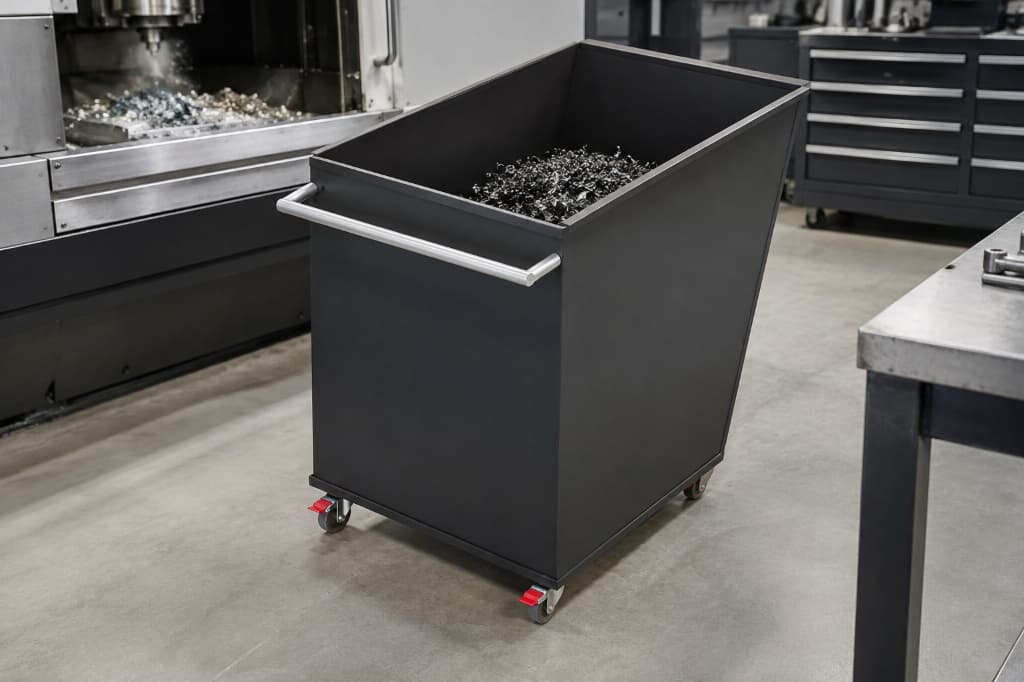
This study analyzes the MJI-CR200 cart, with 200 liters, a leak-proof tank, side drain and four casters, used to collect and move machining chips internally. It estimates the full cart mass for the main chip types, calculates the pushing force required from caster rolling resistance and relates the result to ergonomic references (ISO 11228-2 and NR-17). It also discusses cutting fluid retention and recovery by the leak-proof tank, classification of oily waste (ABNT NBR 10004) and compatibility with the MJI-TC 500 Tipper.
Table of Contents
1. Introduction: The Forgotten Link in Chip Logistics
On a machining line, chips are produced continuously, and the cart that collects them under the machine conveyor is the link between process and disposal. When that cart leaks oil, is too heavy to push, or does not fit the discharge equipment, the plant loses productivity, dirties the floor and exposes the operator to risk.
The MJI-CR200 Cart holds 200 liters, measures 733 x 552 x 652 mm (length, width, height), and has a continuous-weld leak-proof tank, side drain, guiding front lip, tubular handle and four reinforced casters. This study quantifies what that means in practice.
2. Payload Mass: It Depends on the Chip Type
The 200-liter (0.2 m³) volume is always the same, but mass varies a lot with the material and chip form. Long, tangled ribbon chips take up lots of volume with little mass. Short, fragmented chips, especially cast iron, are much denser.
Approximate Mass of the Full Cart (200 L)
Reference bulk-density ranges (vary with compaction and retained fluid):
Add the cart's tare weight. The MJI-TC 500 works with up to 500 kg combining cart and chips, and cast iron is the most demanding case.
3. Pushing Force: Rolling Resistance
The horizontal force needed to keep the cart moving on level ground is set by the casters' rolling resistance: F = μ · m · g, where μ is the rolling-resistance coefficient. The starting (initial) force is usually larger than the sustaining force, due to inertia and casters that must swivel first.
Pushing Force (Smooth Concrete Floor)
4. Ergonomics: Handle, Height and Stability
NR-17 requires working conditions to be adapted to workers' psychophysiological characteristics, including manual load transport. On the cart, three design decisions bear directly on this:
Even so, we recommend limiting manual transport distance and emptying the cart before it reaches the maximum mass the tipper allows.
5. Leak-Proof Tank, Drain and Oily Waste
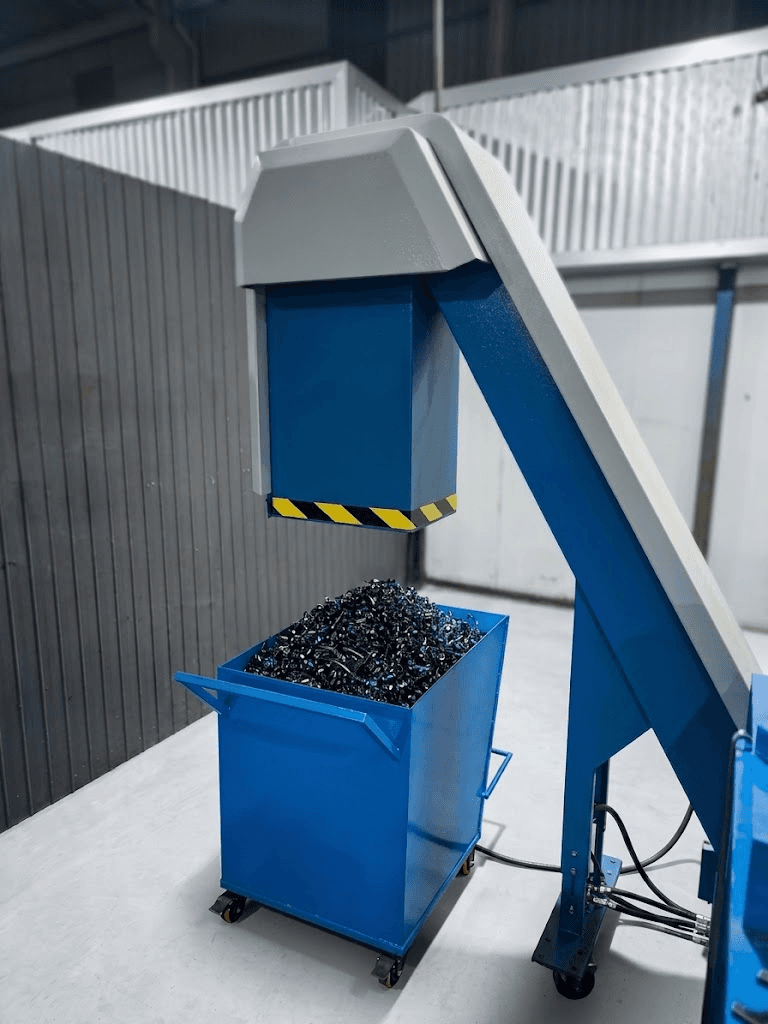
Machining chips arrive wet with cutting fluid. In an open cart, fluid runs onto the floor, creates a slip hazard and contaminates the yard. In the MJI-CR200, the continuous-weld leak-proof tank holds the liquid, and the side drain with plug lets it be drained in a controlled way for recovery.
This brings three measurable benefits:
The inclined front lip guides the discharge and fits the MJI-TC 500 Tipper, closing the collect, transport and disposal cycle.
Operating Tip
Open the side drain and let the fluid run off for a while before taking the cart to the tipper. This reduces transported mass and increases cutting fluid recovery.
6. Technical Conclusion
The chip cart looks like a simple item, but it sets the productivity and safety of the whole disposal chain. Sizing payload mass by chip type, checking pushing force with suitable casters and retaining fluid in a leak-proof tank are the decisions the MJI-CR200 builds in.
To size the cart fleet for your machining line, talk to INCOFORK engineering.
Frequently Asked Questions (FAQ)
Engineering technical answers regarding kinematics, hydraulic circuits, NR-12/NR-10 safety and shop floor integration.
1How much does the cart weigh when full of chips?
It depends on the chips: 20 to 80 kg for long steel or aluminum chips, up to 300 to 400 kg for cast iron, plus the cart's tare. The calculation should therefore use your material.
2How much force is needed to push the cart?
On smooth concrete, the sustaining force is on the order of 8 to 16 kgf for 400 kg total mass, with starting requiring up to double. Ramps and uneven floors increase this considerably.
3Does the cart work with equipment other than the tipper?
Yes, it is a regular collection and transport cart. The front lip and geometry are optimized for the MJI-TC 500 Tipper, but it can be used independently.
4What is the side drain for?
To drain and recover the cutting fluid held in the tank, reducing transported mass and avoiding puddles on the floor.
References & Standards
- BRAZIL. Ministry of Labor and Employment. Regulatory Standard No. 17 (NR-17): Ergonomics. Brasília: MTE.
- INTERNATIONAL ORGANIZATION FOR STANDARDIZATION. ISO 11228-2: Ergonomics — Manual handling — Part 2: Pushing and pulling. Geneva: ISO.
- ASSOCIAÇÃO BRASILEIRA DE NORMAS TÉCNICAS. ABNT NBR 10004: Solid waste — Classification. Rio de Janeiro: ABNT.
- SNOOK, S. H.; CIRIELLO, V. M. The design of manual handling tasks: revised tables of maximum acceptable weights and forces. Ergonomics, v. 34, n. 9, 1991.
- DINIZ, A. E.; MARCONDES, F. C.; COPPINI, N. L. Tecnologia da Usinagem dos Materiais. São Paulo: Artliber Editora.
Related Equipment
MJI-CR200 Metal Chip & Scrap Cart
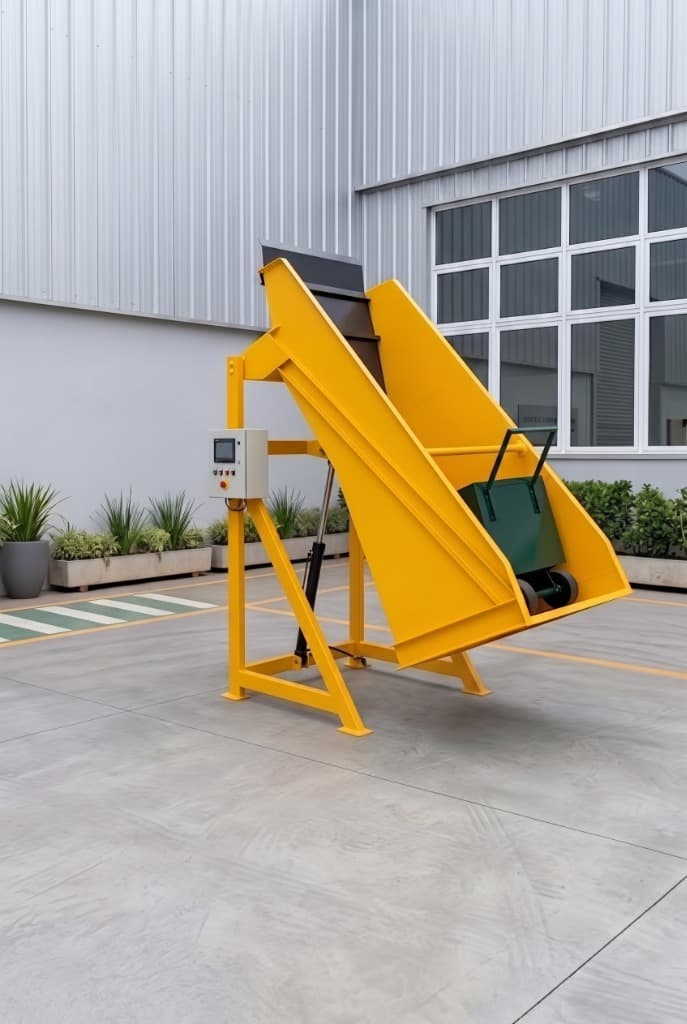
Autonomous station with 1.5 HP electro-hydraulic power unit, high-pressure cylinder (100 bar) with deceleration dampening via 3/8" valve, 135° tipping cradle, and full NR-10/NR-12 compliance.